.svg)
.svg)
.svg)
.svg)
.svg)

April 10, 2026
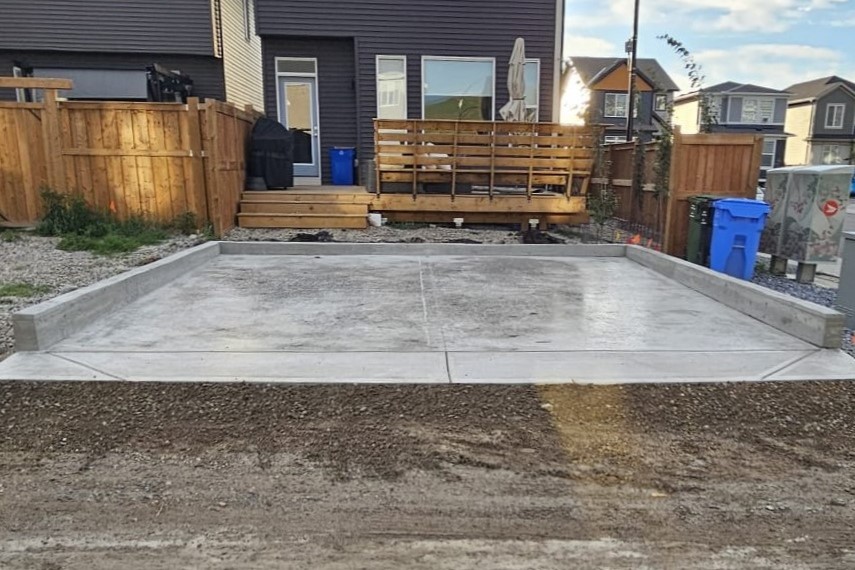
Why Is a Concrete Garage Pad Important?
Expert Guide to Garage Concrete Pads in Calgary’s Harsh Climate
A concrete garage pad is one of the most critical parts of any garage build. It’s not just a slab — it’s the foundation that supports everything above it. Without a properly built concrete pad, even the best-designed garage can run into serious problems over time.
It is highly recommended to work with a specialist when building your garage pad. Proper planning, preparation, and installation are critical to ensuring long-term performance. Hiring experienced professionals helps prevent costly issues down the road — including cracking, settlement, drainage problems, or even the need to demolish and completely rebuild the entire structure.
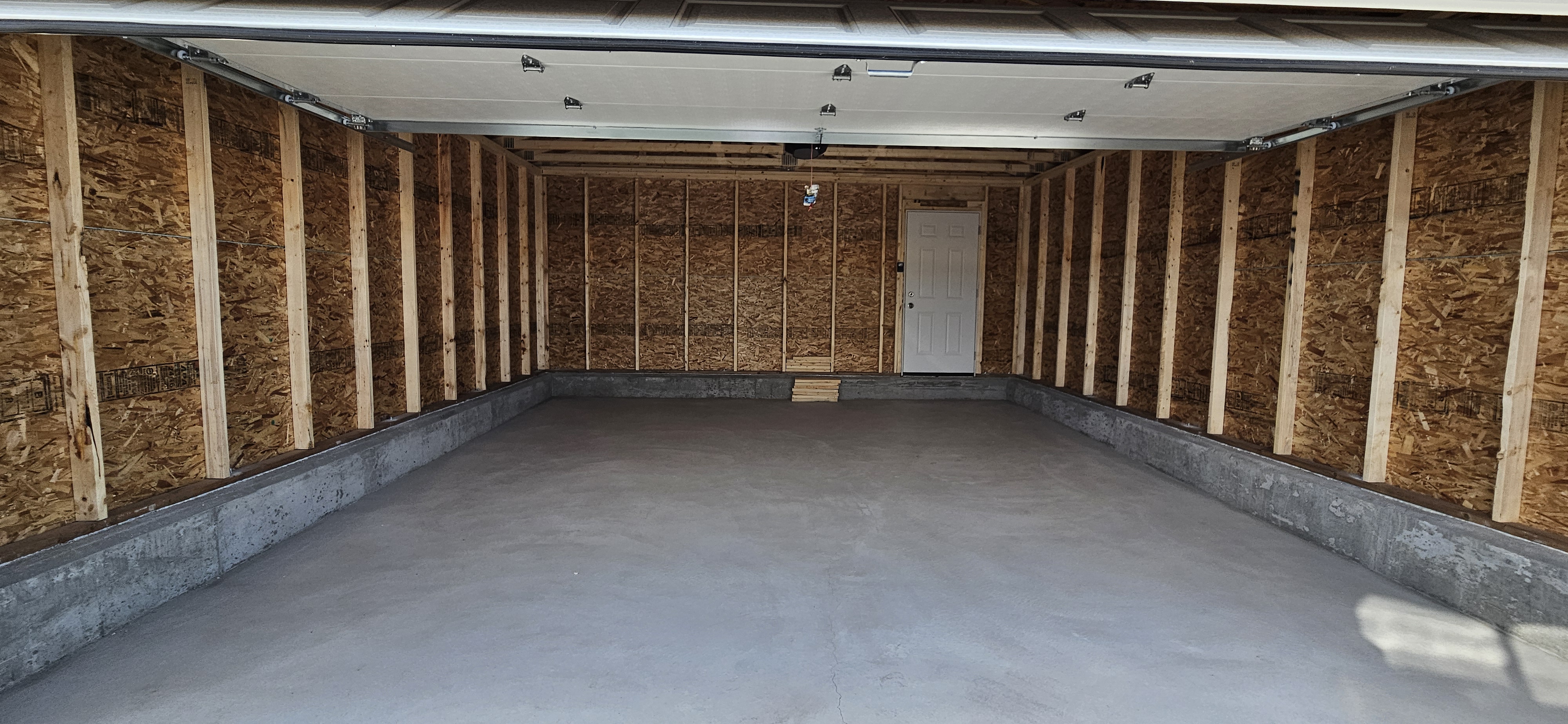
Why a Strong Garage Concrete Pad Makes All the Difference:
1. Provides Structural Stability
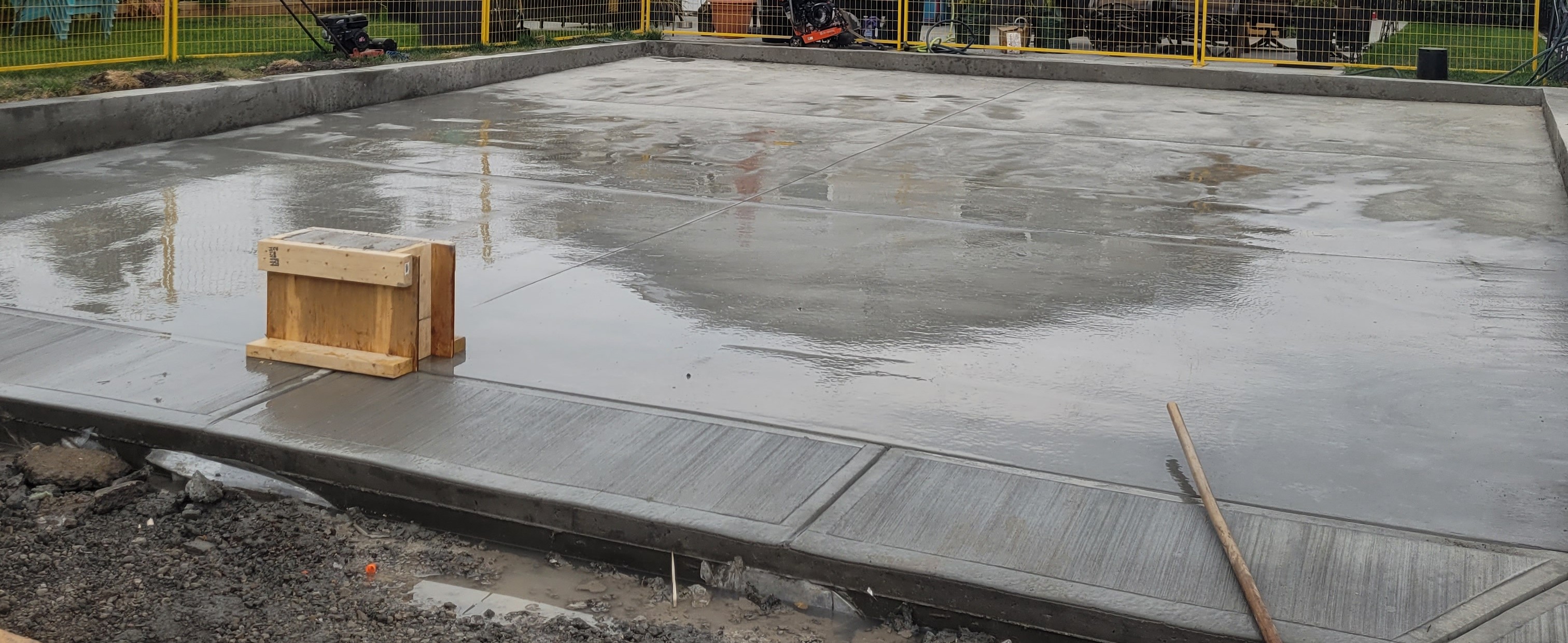
A professionally installed concrete garage pad is essential for building a durable and long-lasting garage. It provides a stable, level foundation that supports heavy vehicles and structural loads. Without a properly poured garage slab, soil movement can cause cracking, uneven floors, and costly structural damage.
2. Prevents Cracking and Shifting
In Calgary, as well as most of Alberta, harsh freeze-thaw cycles cause soil expansion and contraction that can damage poorly built slabs. A professionally installed and reinforced concrete garage pad helps stabilize the foundation, resist ground movement, and prevent long-term cracking and structural damage.
3. Ensures Proper Drainage
A properly poured concrete garage pad is graded to ensure water drains away from the structure. This is especially important in areas with heavy snowfall and rainfall, where poor drainage can lead to water pooling, ice buildup, foundation deterioration, and long-term structural issues.
4. Supports Heavy Loads
Garages are often built to accommodate heavy vehicles such as trucks and SUVs. A properly constructed concrete garage pad provides the strength and durability needed to support these heavy loads without sinking, cracking, or deteriorating over time.
5. Increases Longevity of Your Garage
A strong concrete garage foundation helps extend the lifespan of your entire structure. It reduces long-term wear and tear, minimizes the risk of costly repairs, and ensures your garage remains stable, functional, and durable for years to come.
6. Improves Safety
Cracked or uneven concrete surfaces can create serious safety hazards. A properly installed, smooth, and well-finished concrete garage pad helps reduce the risk of trips, falls, and vehicle damage while ensuring a safer and more reliable surface for everyday use.
7. Adds Property Value
A high-quality, professionally installed concrete garage pad increases overall property value and market appeal. It provides a strong, long-lasting foundation that appeals to potential buyers seeking durable, well-constructed homes with reliable infrastructure..
How We Ensure Your Concrete Garage Pad Is Built to Last
A look at the key materials and construction methods we use to create strong, durable garage foundations that stand up to time and weather
At Corsac Construction Ltd., building a long-lasting garage pad isn’t just about pouring concrete — it’s about using the right materials, proper reinforcement, and proven techniques. Every step we take is designed to handle tough conditions like those in Calgary.
Here’s how we do it:
1. Strong Base with Recycled Concrete & Gravel Mix
We start with a 4" compacted base made from recycled concrete and gravel. This mix of crushed concrete and aggregate creates a dense, stable, and well-draining foundation that locks together, helping prevent shifting, settling, and frost-related movement over time.
Why it matters:
✓ Prevents settling and sinking
✓ Improves load distribution
✓ Enhances drainage beneath the slab
✓ Eco-friendly and highly durable
A solid base is critical — if the base fails, the concrete above it will too.
2. Poly Vapour Barrier
We install a polyethylene vapour barrier beneath the concrete slab to block ground moisture from rising into the concrete. This helps prevent dampness, reduces the risk of cracking and surface deterioration, and improves the long-term durability of the garage pad—especially in freeze-thaw climates.

Why it’s important:
✓ Prevents moisture from rising through the slab
✓ Protects against mold and mildew
✓ Reduces surface damage and deterioration
✓ Helps maintain indoor air quality if the garage is enclosed
This layer is especially important in areas with moisture and changing temperatures.
3. Rebar Reinforcement (24” On Center)
We install 10M steel reinforcing bars (rebar) in a grid pattern, spaced 24 inches on center throughout the garage concrete slab. This reinforcement helps strengthen the concrete, control cracking, and improve load-bearing performance for long-term durability of your garage.
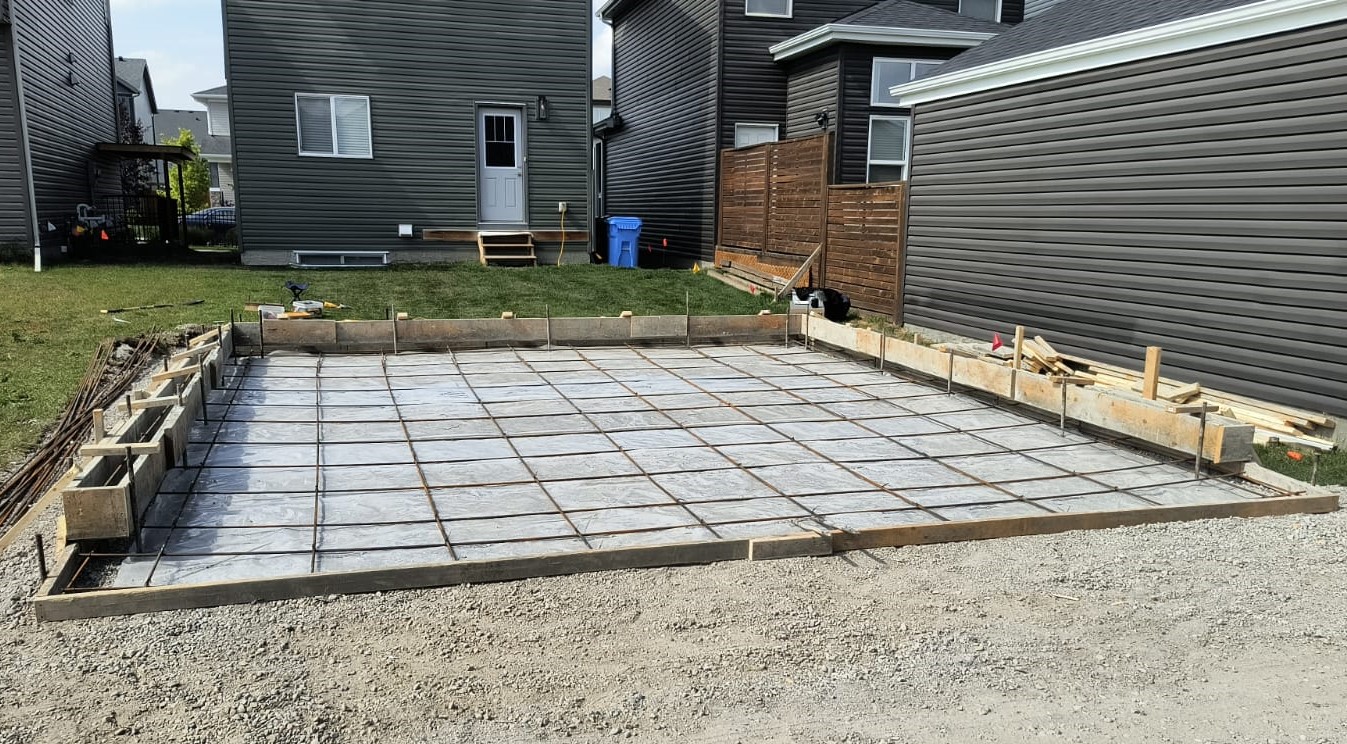
Why rebar is essential:
✓ Adds tensile strength to concrete
✓ Reduces cracking over time
✓ Helps the slab hold together under pressure
✓ Increases overall structural integrity
Concrete is strong in compression but weak in tension — rebar solves that problem.
4. 4” Thick, 32 MPa Concrete Mix
We use a 4-inch thick garage concrete slab with 32 MPa (megapascal) concrete, a high-strength mix designed for residential and heavy-use applications. This provides excellent durability, improved load-bearing capacity, and better resistance to cracking and freeze-thaw damage over time.

Why this matters:
✓ Higher strength means better durability and load capacity
✓ Resists cracking from temperature changes
✓ Withstands vehicle weight and daily wear
✓ Ideal for Calgary’s freeze-thaw cycles
Using the right concrete strength ensures your garage pad performs for decades.
5. Concrete Curb for extra strenght and waterproofing
A concrete curb is important because it strengthens the perimeter of the slab, which is typically the most vulnerable area for cracking and movement. It helps distribute loads more evenly along the edges, provides added support for garage walls or framing, and improves overall structural stability. A curb also helps reduce water intrusion at the edge of the slab and gives the garage pad a cleaner, more durable finish—especially important in climates with freeze-thaw cycles like Calgary.
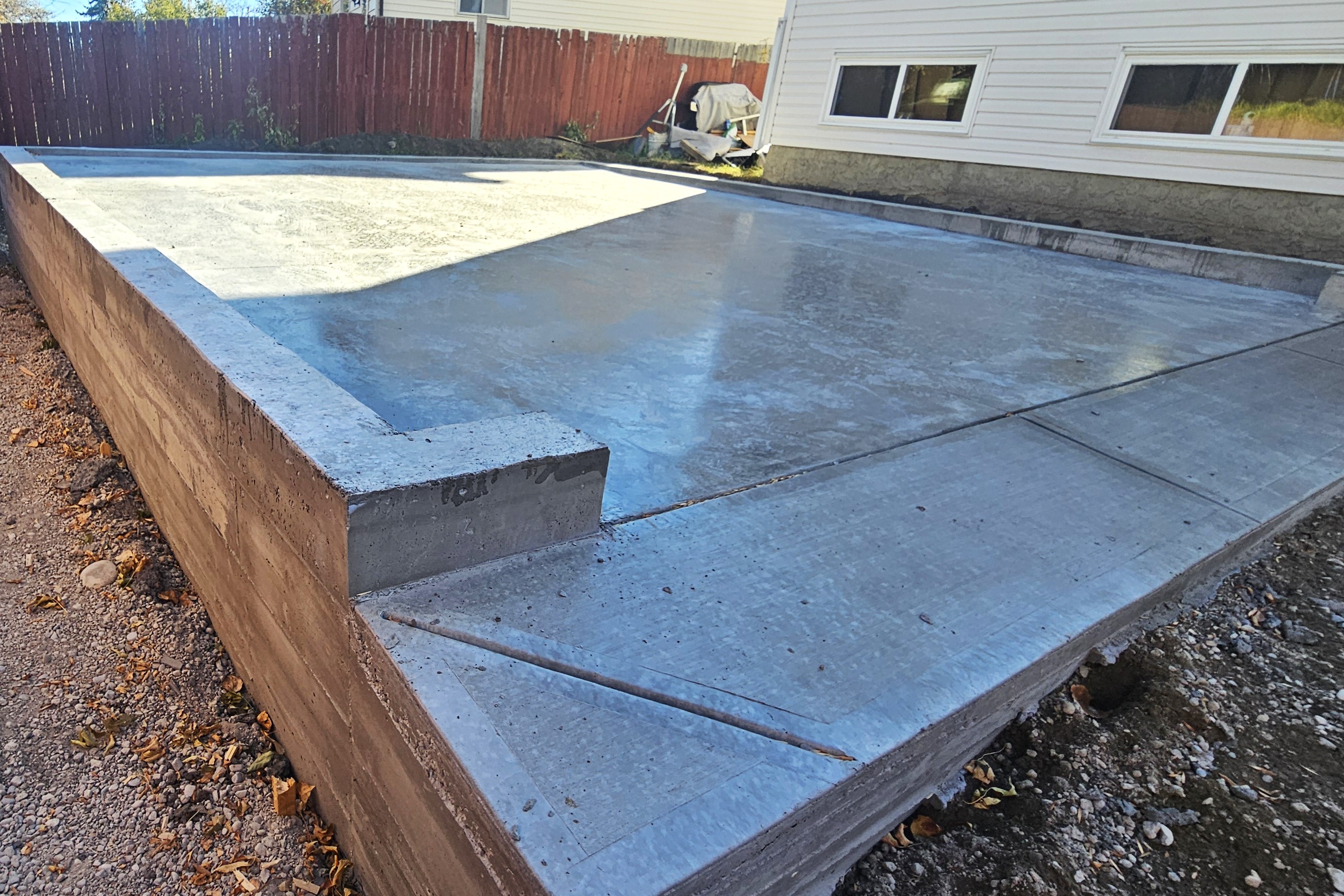
Why a curb is important:
✓ Helps support garage walls and structure
✓ Prevents water from running into the garage
✓ Adds durability and a clean, finished look
Curb helps to eliminated water from entering your garage, while adding strength to the most critical part of the slab—the edges.
6. We Use Expansion Joints in a Concrete Garage Pad
We install expansion joints in concrete garage pads to allow the slab to naturally expand and contract with temperature changes. This helps control where cracking occurs and protects the structural integrity of the concrete over time.
In climates like Calgary, where freeze-thaw cycles are frequent, expansion joints are especially important for long-term durability.

Why this matters:
✓ Helps prevent random cracking by controlling slab movement
✓ Allows concrete to expand and contract with temperature changes
✓ Reduces stress caused by freeze-thaw cycles
✓ Improves long-term durability of the garage pad
✓ Protects structural integrity and surface finish over time
7. We Use Sealant on a Concrete Garage Pad
Sealant is used to protect the surface of a concrete garage pad from moisture, salt, oil, and freeze-thaw damage. In climates like Calgary, sealing is especially important because it helps prevent water from penetrating the concrete and causing cracking, scaling, or surface deterioration over time.
Why Sealant Is Important:
✓ Protects against water and moisture penetration
✓ Reduces damage from road salt and chemicals
✓ Helps prevent freeze-thaw cracking
✓ Extends the lifespan of the concrete surface
✓ Improves appearance and makes cleaning easier
It’s important to use concrete sealant both before and after winter to protect your garage pad from seasonal damage.
Before winter, sealing helps block moisture and road salts from penetrating the concrete when freeze-thaw cycles begin. After winter, reapplying sealant helps restore protection that may have worn down and prevents new cracks, surface scaling, and deterioration caused by snowmelt, salt, and repeated freezing.
In climates like Calgary, this routine maintenance is especially important for extending the lifespan of a concrete garage pad.
For best results, Corsac Construction recommends using a high-quality penetrating or acrylic concrete sealer such as BEHR PREMIUM or Quikrete, available at Home Depot, to protect garage pads from moisture, salt, and freeze-thaw damage in climates like Calgary.
Built for Calgary Conditions
Every detail in our construction process is designed to withstand the unique demands of Calgary, including harsh freeze-thaw cycles, shifting ground conditions, and heavy vehicle loads, ensuring long-lasting strength and durability.
When Do You Need Structural Drawings for a Concrete Slab in Alberta?
In Alberta, structural drawings are sometimes required before you can build a concrete slab — especially for garages and larger structures. These drawings are typically prepared by a professional engineer and ensure your project meets local building codes and safety standards. Typically If your garage slab will have an area bigger than 55 m2 (592 sq. ft.) or garage with a second story, the structural drawings are required and you need to hire a professional.
Why:
Larger structures place more load on the concrete, so proper design is critical to prevent failure.
Garages with structural drawings cost more
When a garage project in places like Alberta requires engineered structural drawings, it means the design must meet stricter safety and building code requirements. This adds both design costs and construction requirements.
1. Engineering and design fees
Structural drawings must be prepared by a licensed structural engineer.
This adds professional design and stamping costs
✓ Includes calculations for loads, soil conditions, and reinforcement
✓ Ensures compliance with local building codes
2. More detailed construction requirements
Engineered plans often specify:
✓ Thicker concrete slabs
✓ More rebar or tighter spacing
✓ Deepened or thickened edges
✓ Better base preparation
This increases material and labor costs.
3. Site-specific conditions
In areas like Calgary, engineers may design for:
✓ Frost heave protection
✓ Expansive or weak soil conditions
✓ Heavy snow loads or vehicle loads
Each condition can increase construction complexity.
4. Permit and inspection requirements
Projects requiring structural drawings often need:
✓ Building permits
✓ Possible inspections during construction
✓ Compliance documentation
This adds time and administrative cost.
5. Higher durability standards
Engineered garages are typically built to a higher structural standard, meaning:
✓ Stronger foundation systems
✓ Better long-term performance
✓ Reduced risk of failure or cracking
Higher quality often comes with higher upfront cost.
Work With the Right Team
At Corsac Construction, we help clients determine when structural drawings are needed and can coordinate with engineers when required. Our goal is to make sure your concrete garage pad is built safely, correctly, and to code.
Let’s Build It Right the First Time
Avoid costly repairs, cracking, or full rebuilds by working with experienced professionals from the start.
Contact Corsac Construction today to schedule your consultation and get a quote for your garage pad project.
📍 Serving Calgary and surrounding communities
📧 Email: contact@corsac-construction.com
Need a Calgary Builder You Can Trust?
Let’s Build Your Dream Project Together
Calgary's trusted garage and basement builder. We provide experience that’s smooth from start to finish. Book your free consultation today. No pressure, just possibilities.
.png)

.svg)
.svg)
.svg)